Partial Weight Bearing Insole
BMED 2310 design project, Georgia Tech, team of 5, Jan to Jul 2025
What
A wearable that measures how much weight a patient puts on an injured leg and shows it live on their phone, so they stay inside the partial weight bearing limit their physical therapist sets.
Why
After a lower-limb fracture, patients are told to bear only a percentage of their body weight, but even trained physical therapists misjudge it by up to 30%, and training on a bathroom scale does not carry over to walking. The few biofeedback devices cost about $700 to $7,000 or are not sold in the US.
How
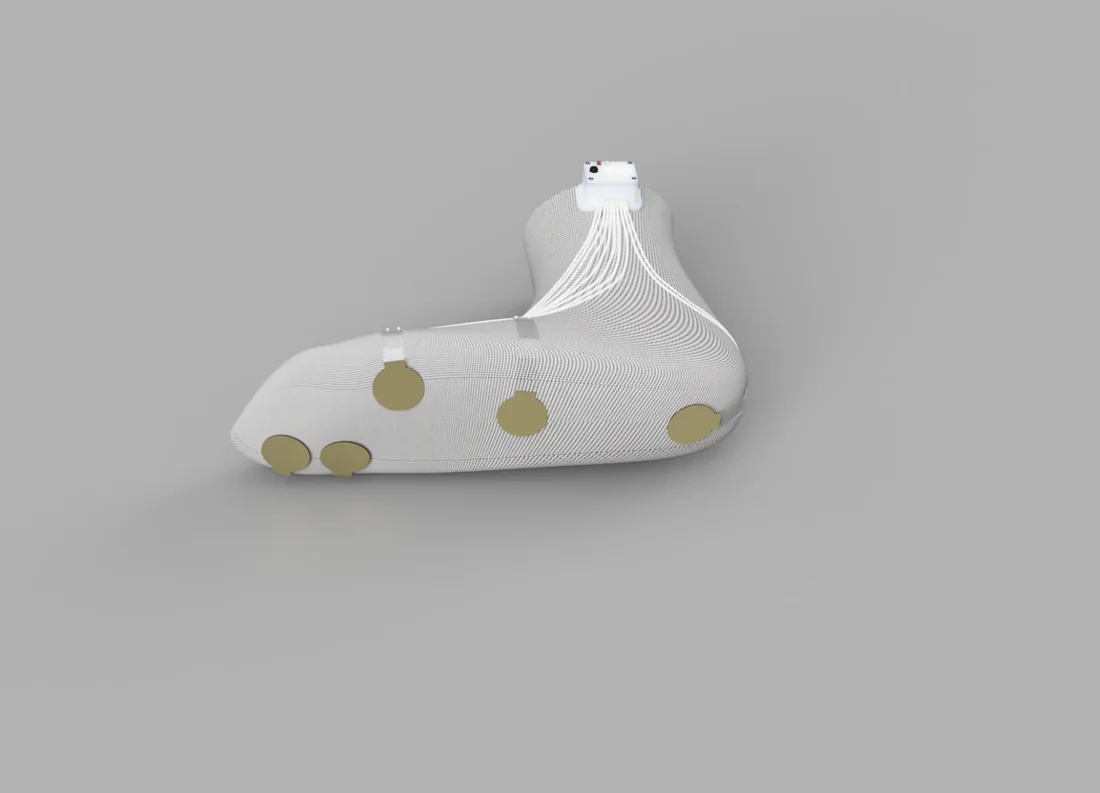
- Placed three 50 kg force-sensitive resistors at the foot's three critical contact points, sewn into a sock liner worn in the patient's own shoe
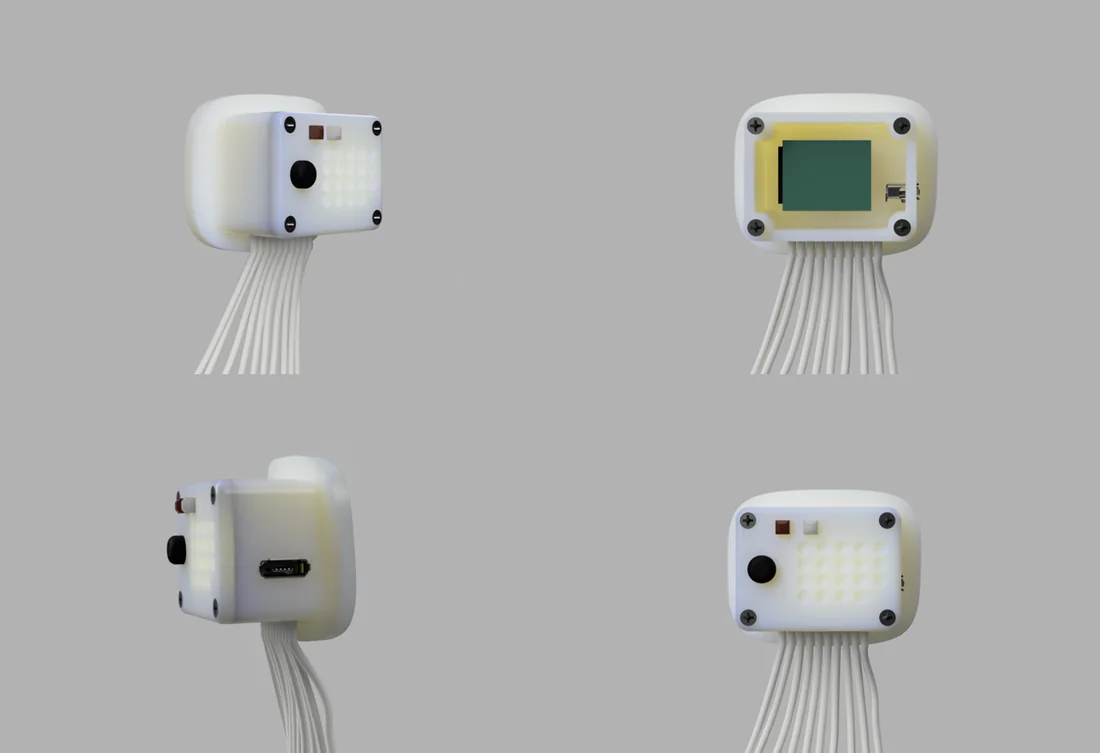
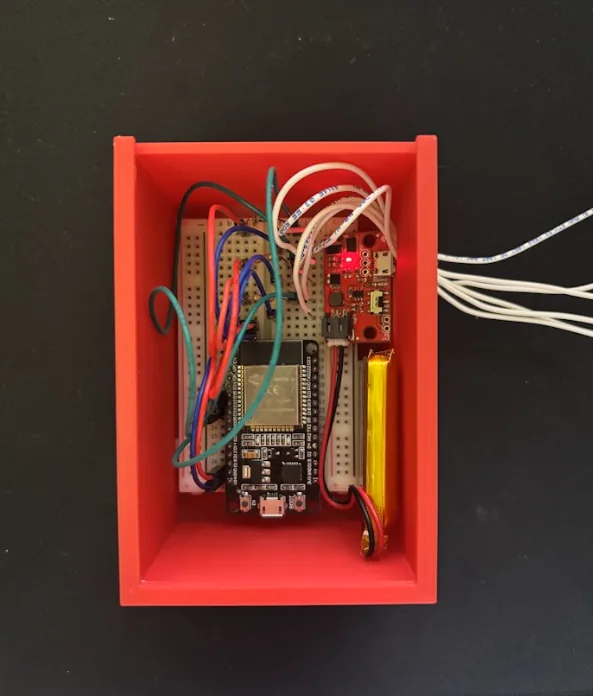
- Built the processing unit around an ESP32, with the sensor circuit and a rechargeable 3.7V LiPo with a charging booster, in a 3D-printed PLA housing
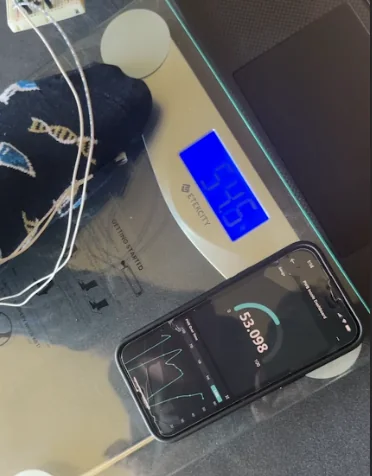
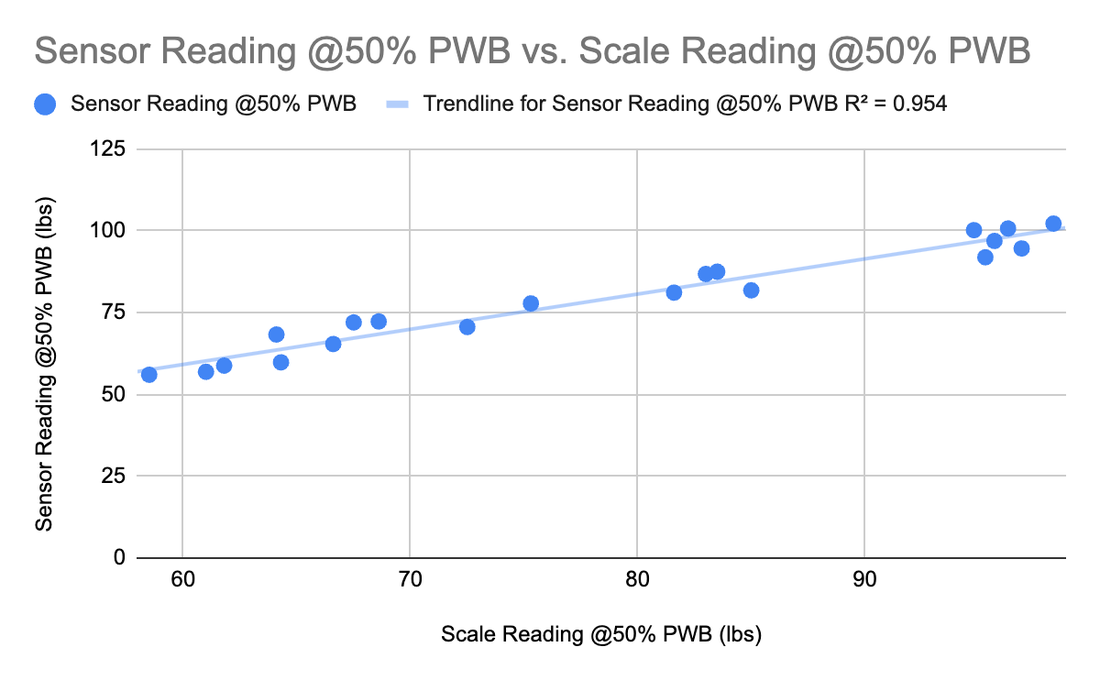
- Wrote the Arduino C++ firmware and calibrated the three sensors with a linear regression against a bathroom scale, across users of different weights
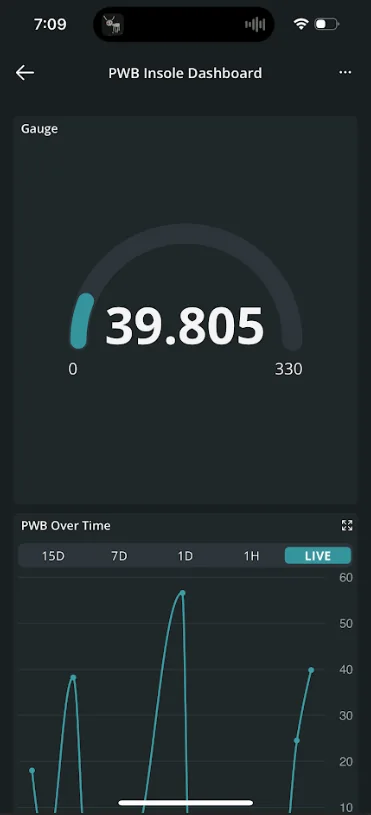
- Streamed calibrated load over WiFi to Arduino Cloud for a mobile app with a live gauge and progress over time
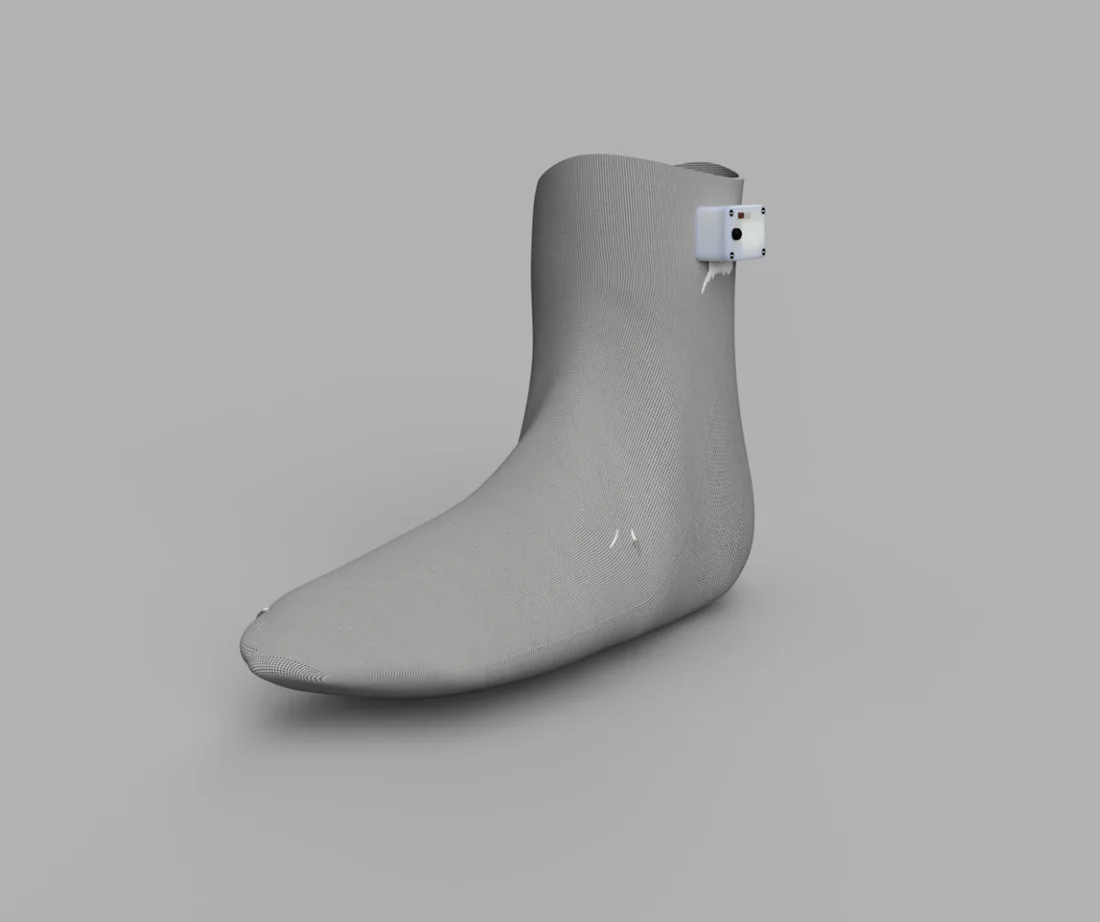
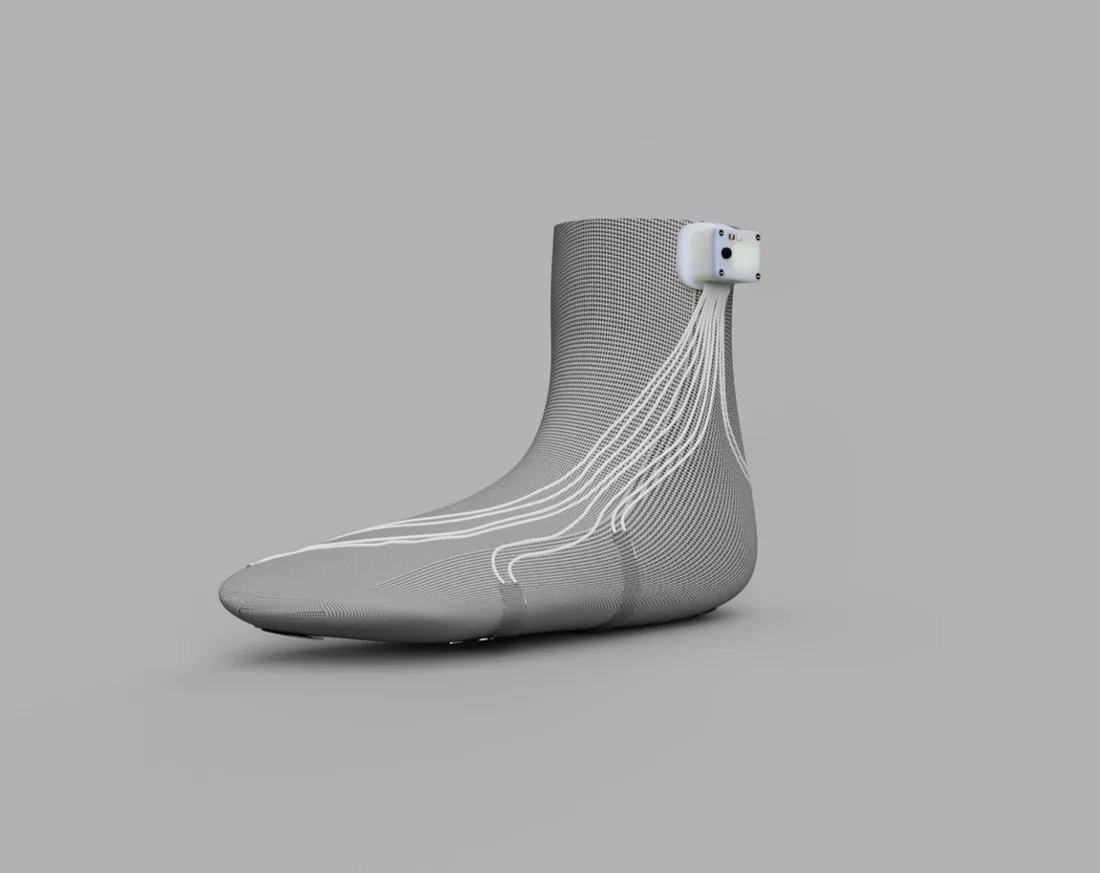
- Helped model the looks-like CAD for the next version, a double-layer sock with a miniaturized processing unit
- ESP32
- Arduino C++
- Force-sensitive resistors
- Calibration
- Linear regression
- Arduino Cloud
- LiPo charging
- 3D printing
- CAD
Results
- Within 3% of a reference scale at 25, 50 and 75% body weight (n = 20, paired t-tests)
- Working prototype from foot sensors to a live phone gauge
Modeling
The CAD for the next version: wiring sealed inside a double-layer sock and a processing unit small enough to sit at the ankle.